
“Should I call you Haaland or Sparsh?”
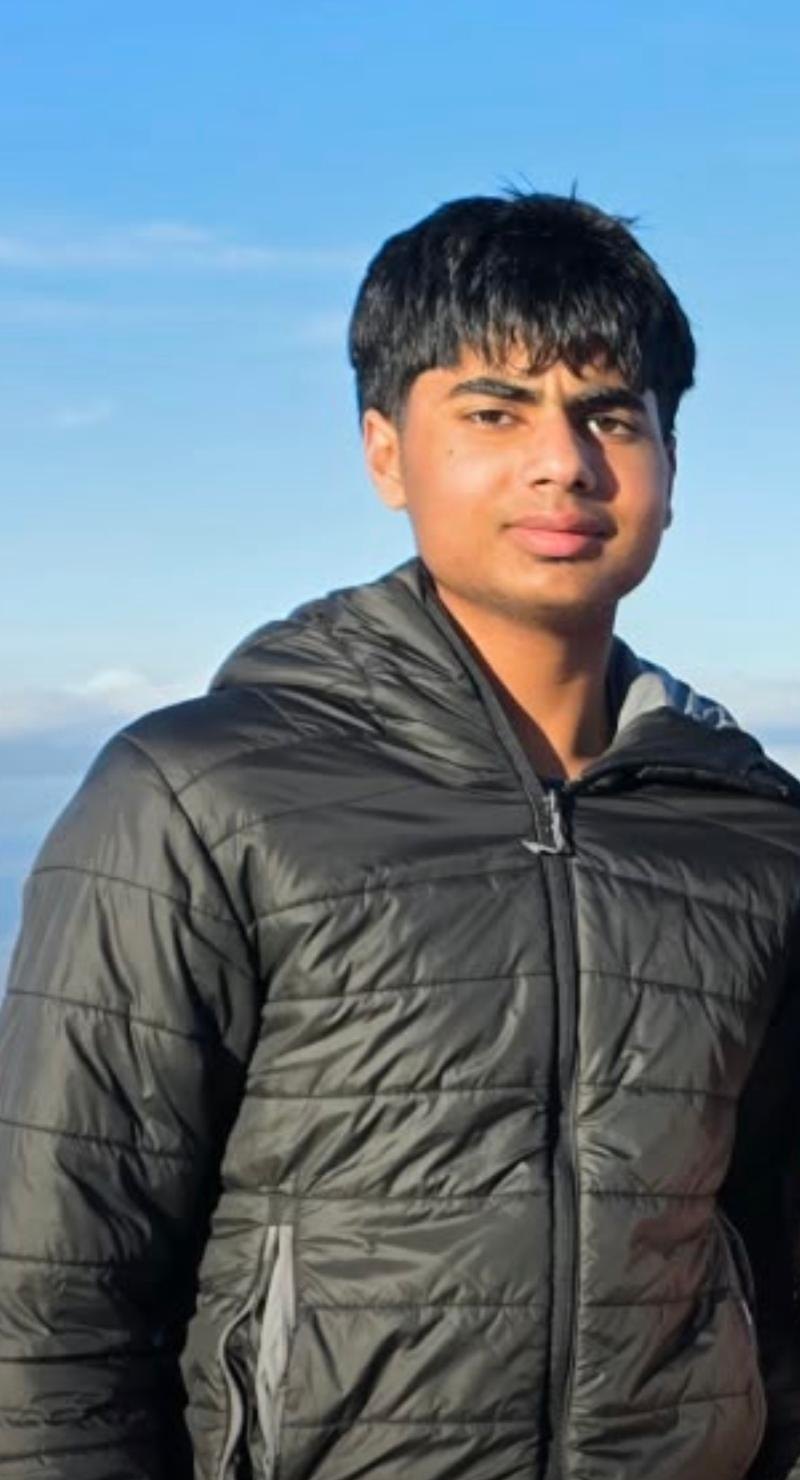
Sparsh Saini
I was asked that at football when I was fifteen. I wanted to be called Haaland, because he was respected. But I didn’t want to be “like” someone I admire. I wanted to become admirable myself.
I’m sixteen, I’m from Australia, and I’m nearly 19,000 words into a book about building your worth. It started with $2 I stole from my dad’s wallet.
I tried to buy my worth
In primary school, my lunch was plain roti with vegetables, or curry on the side. Everyone else brought bags of nut bars, Doritos and toasted sandwiches. I wanted to fit in. I wanted to be like the others.
One morning I tiptoed into the living room, dodging the floorboards that creak, and opened the drawer beside my dad’s desk. His wallet had $10 sticking out. $20. $50. Too much, I thought. I unclipped the pouch where he kept his coins and took $2. Not by asking. I stole it.
At lunch I spent it on the garlic bread my friends always bought and gave them half. Warmth flooded my chest. Not from the generosity. From the approval.
The next day I took $20 and bought snacks for all of them. People started talking to me, the same people who used to ignore me when I sat next to them in class.
Then I opened the wallet and found $50 sticking out. I took it. At lunch I bought garlic bread, chicken nuggets and an ice cream, gave it all away and kept one slice for myself. Nathan patted me on the back and said, “You’re so nice.” Kingston asked, “How are you so rich?”
Guilt started piling up, so I stole less. $20. At the canteen a friend offered me a chicken nugget. I’d overheard that nuggets don’t really contain chicken, and I believed it. I’m Sikh. To be liked, I’d given up the most basic part of who I was, and I didn’t even know.
Then one afternoon I got home and my parents were standing at the door, smiling. My dad asked what had happened to his $50. I told him I’d borrowed a little.
“Are you someone who steals? Or are you someone who stays true to himself?”
My heart dropped. Later that night I sat in my mum’s room, swinging my legs, and told her I was sorry. She said she wasn’t worried about the money. “God sees everything you do,” she told me. “If you do good, good will happen. If you do bad, bad will happen.”
That hit me harder than getting caught. I sat on the edge of my bed, joined my hands, and started repeating the Mool Mantar.
For about three years I wasn’t consistent. Some months I prayed every night, then I’d forget. But I kept coming back. A year in, I went to India and read the Sukhmani Sahib with my grandparents, who taught me how to pronounce it.
At the start of Year 9 I stopped missing days. Fifteen minutes a night, and 24 days later I finished the full prayer for the first time.
A few months later I found Walking with Nanak on our bookshelf, a book about the journey of the first Guru, and set myself a few pages a night. Lights dim, everyone asleep, I fell into it.
One night I closed the book and started praying. Every line was visible in front of me. My eyes were open, but I saw the words. Everything around it, pitch black.
Nobody saw any of it, and that was the point. I wanted to prove to myself that it was mine, not put it on show.
That habit taught me more about worth than any pat on the back ever did.
The Three As of external worth
Years later I could see the pattern in that story. Most of us try to get our worth from outside ourselves, in one of three ways. I’ve lived all three.
Approval
Every decision has to be checked by someone else first. I paid $50 for a pat on the back and a “you’re so nice.”
Attention
“How are you so rich?” felt amazing for about a week. Then free food became normal, and the attention stopped. It always does.
Achievement
I lost the Student Leader vote twice. When I finally got the role, it didn’t fill anything. There was always someone above me.
Worth can never be found. It can only be built.
That’s what The Planet of Yourself is about. You build your worth from the inside, through three layers: the Core, the Mantle and the Crust. Once it’s there, you find your meaning by putting it to use.
Three habits
Praying I started praying. That was one.
The gym Then at the start of Year 10 I got consistent at the gym. Number two.
This book And then writing this book was the complete number three.
Viewed from a zoomed-out lens, those three things are what led to this book.
How I got here
-
Year 5
I begged to learn code
My parents found me an online tutor. We went from Scratch games to typing every line myself, and one day I built my first website in HTML. It’s why I built this one myself.
2023 · Year 7
High school
Everyone told me something different about how hard it would be. The only way to know was to go. That idea became a chapter of the book.
-
2024 · Year 8
A speech and an exam
I gave the Year 8 graduation speech with a throat that felt full of cinnamon sticks. In an English exam where most of my class brought in pre-written essays, I didn’t, and got one of the top marks.
2025 · Year 9
No more missed days
I started praying every night without missing one. I also failed an English essay I thought I’d nailed, because I answered the wrong question. I wrote about it.
-
April 2025
The first page
Dribbling a basketball at the courts, I couldn’t stop thinking up analogies for hard work and consistency. I opened a blank document and started writing The Planet of Yourself.
While writing
Losing my tutor
The tutor who’d taught me to code since Year 5 passed away. Every project I start or finish, this site included, is thanks to him.
End of Year 9
The email that said ERROR
My third try at Student Leader. The first email said I wasn’t selected. Half an hour later, a second one arrived starting with “ERROR”: I was Year 10 Student Leader for 2026. The full story.
2026
A detour
A friend had started a business at 18 and just hired his first employee. I tried starting one too, cold-calling vet clinics at lunch to sell AI automation. Five calls in, I knew I didn’t stand a chance, and that what I’m actually good at is thinking deeply and helping people. I went back to the book.
Now
Nearly 19,000 words in
The Core is drafted. I’m writing the Mantle and the Crust, and sending Dear 15 every week along the way.
What my logo is made of
First, the dark. The night I prayed after reading Walking with Nanak, my eyes were open, but I saw the words. Everything around it, pitch black.
In April 2025 I opened a blank document and started writing The Planet of Yourself. The first thing on the page was a blinking cursor. The book isn’t finished, so it’s still blinking.
Under it, the top of a planet. Picture yourself as one. A cursor can’t find words. It can only add them, one at a time. Worth can never be found. It can only be built.
It’s the first screen of my homepage, made small. Beside the book’s name, its cursor stands on the same line as the words, waiting for the next one.
Where else to find me
I post on YouTube and write on the blog. Both move faster than the book does.
Dear 15,
If any of this reached you, Dear 15 will too. A short, honest letter every week, written the way I wish someone had written to me at fifteen.